
 By
By 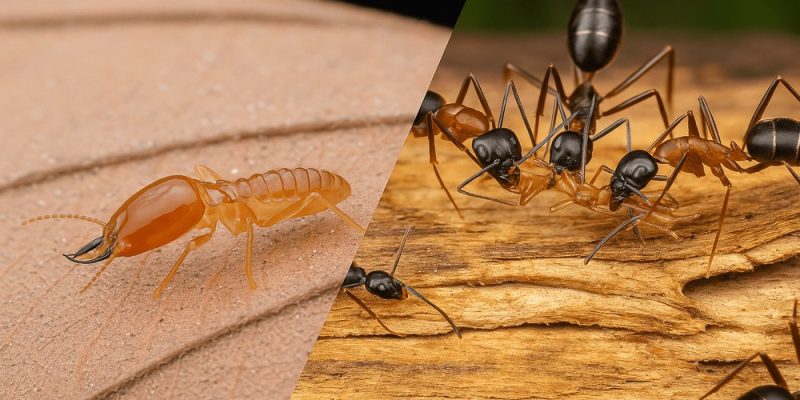
A homeowner taps a deck post that sounds slightly hollow and pulls away a fingernail-sized chunk of wood with obvious galleries inside. The first question is almost always the same: is this termites, or is it carpenter ants? The answer matters, because the two species cause similar-looking damage through completely different mechanisms and respond to completely different treatments. A correct identification in the first visit saves a homeowner thousands of dollars and months of wasted effort. Kansas City pest control providers who handle wood-destroying pests regularly, ZipZap Termite & Pest Control in Lawson among them, see the misdiagnosis happen often enough that it deserves a clear explanation.
The Core Biological Difference
Termites eat wood. Carpenter ants do not.
That single distinction drives everything else. Subterranean termites (Reticulitermes flavipes), the dominant wood-destroying species in the Kansas City metro, actually consume the cellulose in wood and digest it with the help of gut protozoa. The galleries they produce are the result of that feeding.
Carpenter ants (Camponotus pennsylvanicus is the most common species in Missouri) excavate wood as a nesting activity. They remove material to create chambers for their colony, but they carry it out rather than digest it. The wood that appears to be missing ends up as sawdust-like frass outside the nest opening.
The feeding versus excavating difference explains why the two species target different wood and leave different evidence, and why a treatment that eliminates one does nothing for the other.
What the Galleries Actually Look Like
Opening up a section of compromised wood tells most of the diagnostic story.
Termite galleries are irregular, winding, and lined with a mixture of soil and fecal material that gives them a muddy, packed appearance. Termites need humidity to survive, and they seal their working tunnels with this material to maintain it. The wood they leave behind often looks almost layered, with soft spring growth consumed and harder summer growth left standing in thin plates.
Carpenter ant galleries are clean. Smooth-walled, dry, often finely sanded-looking, with no soil, no fecal packing, and no moisture seal. The ants actively maintain the galleries by removing debris. A homeowner who opens a section of wood and sees sawdust-free, neatly finished tunnels is almost certainly looking at carpenter ants rather than termites.
Both species prefer wood that has been softened by moisture. Carpenter ants in particular will almost always be found in wood that is already decayed to some degree, which is why they cluster around leaking windows, sill plates near gutters, and bathroom subfloors.
The Swarmer Question
Both species produce winged reproductives, and both swarm at similar times of year (late spring in Kansas City), which is the most common point of confusion. Three physical features separate them unambiguously.
Antennae. Termite swarmers have straight, beaded antennae. Carpenter ant swarmers have bent, elbowed antennae.
Waist. Termite swarmers have a uniform body with no visible constriction between thorax and abdomen. Carpenter ants have an obvious pinched waist.
Wings. Termite swarmers have four wings of equal length extending well past the abdomen. Carpenter ant swarmers have a noticeably larger forewing and shorter hindwing.
A single dead swarmer on a windowsill, examined with a magnifying glass or a phone macro lens, produces a reliable identification in under a minute.
The Frass Test
Frass is the single most useful piece of evidence for distinguishing active infestations once the organisms themselves are out of sight.
Carpenter ants produce visible frass that looks like fine wood shavings, often mixed with insect parts and fragments of dead ants. It accumulates in small piles below gallery openings and is unmistakable once a homeowner knows to look for it. Windowsills, the floor below baseboards, the top of a basement beam, and the ground below a porch post are common accumulation spots.
Subterranean termites produce essentially no visible frass. They pack their fecal material into gallery walls rather than pushing it out. Any claim that a homeowner has “found termite frass” in Missouri is almost certainly misidentified material, usually from carpenter ants or from drywood termites (which are not established in the area).
A mud tube running up a foundation wall, by contrast, is nearly definitive for subterranean termites.
Why Kansas City Pest Control Treatments Are Not Interchangeable
Termite treatment targets colonies that usually live in the soil adjacent to the structure. The two dominant approaches (liquid termiticide treated zones such as fipronil/Termidor, or in-ground bait systems such as Sentricon) are engineered around subterranean biology. Neither approach does meaningful work against carpenter ants, which nest in wood rather than soil and forage along completely different pathways.
Carpenter ant treatment targets the nest directly, often located in a wall void, a damp sill, a hollow porch column, or a dead tree near the structure. Effective treatment usually involves non-repellent insecticide applications to active foraging trails, direct injection into accessible nest galleries, and correction of the moisture problem that allowed the infestation to establish in the first place. Outdoor satellite nests in landscape timbers, fence posts, or stump remnants frequently need separate treatment.
A homeowner who pays for termite treatment when the actual problem is carpenter ants will see no improvement. The reverse is also true and potentially more expensive, because missed termite activity continues feeding on the structure during the months a carpenter ant program is running.
When to Bring in a Professional Inspection
Any hollow-sounding wood, any active swarmers, any frass piles, and any mud tubes warrant a professional inspection. The inspection itself usually takes about an hour and produces a written identification plus a treatment recommendation. A Kansas City pest control provider with a board-certified entomologist on staff, as ZipZap Termite & Pest Control has, is positioned to make the distinction accurately in cases where the evidence is ambiguous.
The Short Version
Termites eat wood. Carpenter ants excavate it. Termite galleries are muddy and packed. Carpenter ant galleries are smooth and clean. Termites leave mud tubes. Carpenter ants leave visible frass. Swarmer identification separates the two in under a minute with a magnifying glass. The treatments do not overlap. Anyone looking at compromised wood in a Kansas City home is better served by a short inspection from an experienced professional than by a guess that commits thousands of dollars to the wrong program.







Comments