
 By
By 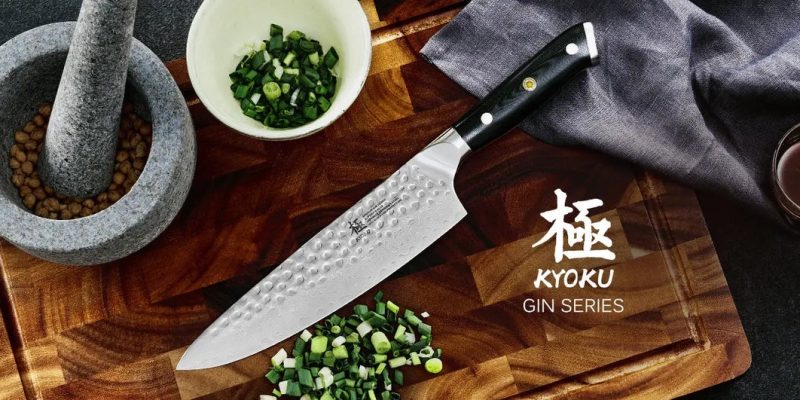
In the world of Japanese cutlery, the large, flashy blades like the Gyuto or the Santoku knife often get all the glory. They are the heavy hitters, the “swords” that command the cutting board. But every master knows that true victory lies in the details.
Enter the Petty Knife.
At Kyoku, we view the Petty knife as the Tantō (the companion blade) to your primary chef’s knife. It is small, incredibly sharp, and indispensable for the intricate tasks that turn a good meal into a culinary masterpiece. If you’ve been struggling to do detail work with a 10-inch blade, it’s time to discover why this “small” knife is a giant in the kitchen.
What Exactly is a Petty Knife?
The name “Petty” comes from the French word petit, meaning small. Think of it as the Japanese evolution of the Western paring knife, but with a significant upgrade.
While a standard paring knife is usually 3 to 4 inches long, a Kyoku Petty Knife, or nakiri knife, typically ranges from 5 to 6 inches (120mm–150mm). This extra length, combined with a slim profile and a razor-sharp Japanese edge, makes it far more versatile than a traditional paring knife.
Why the Petty Knife is a Game Changer
1. Surgical Precision
When you are peeling a delicate peach, removing the seeds from a jalapeño, or “supremeing” an orange, a large chef’s knife is often too cumbersome. The Petty knife offers a level of control that feels like an extension of your fingertips. Its narrow blade and pointed tip allow you to navigate tight corners with ease.
2. The “Off-Board” Specialist
Not all cutting happens on a board. Sometimes you need to peel an apple in your hand or trim the ends off green beans mid-air. Because the Petty knife is lightweight and perfectly balanced, it is safe and comfortable to use “in-hand,” a task that would be dangerous with a heavier blade.
3. Perfect for Small-Scale Prep
Let’s be honest: you don’t always need a 9-inch blade to slice a single clove of garlic or a shallot. The Petty knife is the ultimate “quick-task” tool. It’s the knife you reach for when you want to slice a lemon for a cocktail or dice a small piece of ginger without the weight of a full-sized blade.
4. Intricate Protein Trimming
While it’s not meant for breaking down a whole cow, the Petty boning knife is a surgeon when it comes to trimming silver skin from a tenderloin or de-boning a small cornish hen. Its agility allows you to follow the bone closely, minimizing waste.
The Kyoku Difference: Detail in Every Inch
At Kyoku, we don’t treat our smaller knives as “secondary” tools. We pour the same samurai-inspired craft into our Petty knives as we do our flagship Damascus blades.
- Ultra-Hard Steel: Our Petty knives are forged from high-carbon Japanese steel, ensuring they stay sharp through thousands of precision cuts.
- The 15° Edge: We hone the Petty to a staggering 15-degree angle, allowing it to glide through delicate fruit skins without bruising the flesh.
- Ergonomic G10 Handles: Even though the knife is smaller, the grip is designed for maximum security, ensuring your hand doesn’t slip during delicate tasks.
Is the Petty Knife Right for You?
If you find yourself reaching for a big knife to do small jobs—or if you find traditional paring knives too tiny to be truly useful—the Petty is your “Goldilocks” blade. It fills the gap in your knife roll, providing the finesse required for garnishing and the strength needed for light prep.
Chef’s Tip: If you are a fan of “Mise en Place” (having everything prepped and ready before you cook), the Petty knife will quickly become your favorite tool for those small, aromatic ingredients like herbs, chilies, and garlic.
Ready to Perfect Your Detail Work?
Don’t let the size fool you—the Petty knife is a powerhouse of culinary creativity. Once you experience the control of a Kyoku Petty, you’ll wonder how you ever managed without it.









Comments