
 By
By 
Finding a pest control company in Atlanta is not hard. Finding a good one takes a little more effort. Search online for pest control in the metro area and you will get dozens of results, a mix of national chains, regional operators, and small local companies, all promising to solve your pest problem quickly and affordably. Sorting through that list to find a company worth trusting with your home is where most homeowners get stuck.
The stakes are not trivial. Pest control done well protects your home from damage, keeps your family comfortable, and in the case of termites can prevent repair bills that run into the tens of thousands of dollars. Pest control done poorly wastes your money, delays proper treatment, and in some cases makes a problem worse. Knowing what to look for and what questions to ask before you hire anyone makes a real difference in the outcome.
Here is a practical guide to finding the right exterminator in Atlanta.
Start With Licensing and Insurance
Before you look at reviews, prices, or service offerings, verify that any company you are considering is properly licensed to operate in Georgia and carries adequate insurance. This is the minimum threshold for any pest control work in your home, and it is non-negotiable.
In Georgia, pest control companies and their technicians must be licensed by the Georgia Department of Agriculture. A licensed company has demonstrated that its technicians have the training required to apply pesticides safely and effectively, and it is subject to regulatory oversight. An unlicensed operator is not.
General liability insurance protects you if something goes wrong during treatment, whether that is damage to your property or an injury on site. Workers compensation coverage protects you from liability if a technician is injured while working on your property. Ask for proof of both before you agree to any work.
This step eliminates a portion of the market immediately. Any company that cannot or will not provide proof of licensing and insurance is one to walk away from.
Local Expertise Matters More Than You Might Think
Pest control in Atlanta is not the same as pest control in Minneapolis or Phoenix. The pest species, the seasonal timing, the soil conditions, and the climate all create a local pest environment with specific characteristics that benefit from specific expertise.
Subterranean termites behave differently in Georgia’s clay-heavy, moisture-retaining soil than they do in drier climates. The Asian Tiger Mosquito that makes Atlanta outdoor life so uncomfortable from May through October has different habits than the mosquito species more common in other regions. Fire ants, kudzu bugs, and stink bugs are Southeast-specific pest pressures that a company without local experience handles less effectively than one that deals with them daily.
A top rated exterminator in Atlanta is almost always one with deep local roots rather than a national company applying a standardized approach developed for an average pest environment that does not really match any specific market. Ask how long a company has operated in the Atlanta area. Ask whether their technicians are familiar with the specific pest pressures of your neighborhood or zip code. Local knowledge shows up in inspection quality, treatment effectiveness, and the accuracy of the advice you receive.
What the Initial Inspection Tells You
The quality of a pest control company’s initial inspection is one of the best predictors of the quality of service you will receive going forward. It is also something you can evaluate in real time before you commit to anything.
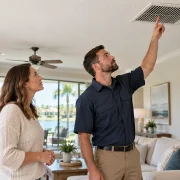
A thorough initial inspection covers the exterior perimeter of the home including the foundation, crawl space, and roofline. It covers the interior including kitchens, bathrooms, utility areas, and any areas where pest activity has been reported. It identifies not just visible pest activity but the conditions contributing to that activity: entry points, moisture sources, harborage areas, and structural vulnerabilities that pests are using or likely to exploit.
At the end of that inspection, the technician should be able to give you a clear, specific picture of what they found, what pest activity is present, what conditions are contributing to it, and what treatment approach they are recommending and why. Vague assessments followed by generic treatment recommendations are a flag. Specific findings followed by targeted recommendations are what you are looking for.
If an exterminator quotes you a price without a proper inspection, that is a significant warning sign. Accurate treatment requires accurate diagnosis, and accurate diagnosis requires a thorough look at the property.
Questions Worth Asking Before You Hire
A confident, transparent pest control company welcomes questions before you sign anything. Here are the ones worth asking.
What specific pests did you identify and where exactly did you find evidence of them? You want specifics, not generalities.
What treatment approach are you recommending and why is it the right choice for this specific situation? The answer should connect the treatment to the pest and the conditions you have, not describe the company’s standard program.
What products will you be using and are there any precautions my family or pets need to take? A professional should be able to answer this clearly and completely.
How will I know the treatment is working and what follow-up is included if activity continues? Good pest control companies stand behind their work with follow-up service when needed.
Do you offer a written service report after each visit? Documentation of what was done, what was found, and what is recommended is the mark of a professionally run operation.
What does your termite protection program cover and what is the warranty? For Atlanta homeowners, this question is not optional. Termite protection is a significant component of pest management in this market and the details of what a warranty covers matter.
Reading Reviews the Right Way
Online reviews are useful but require some interpretation to be genuinely informative. Here is how to read them more critically.
Look at the pattern across a large number of reviews rather than fixating on individual ones. A company with 200 reviews averaging 4.7 stars tells you more than a company with 15 reviews averaging 5.0 stars. Volume and consistency matter more than perfection.
Pay close attention to how the company responds to negative reviews. A company that acknowledges problems, apologizes sincerely, and describes what they did to fix them demonstrates accountability. A company that argues with reviewers, dismisses complaints, or does not respond at all tells you something important about how they handle service failures.
Look for reviews that describe specific experiences rather than just general satisfaction. A review that says the technician found a termite mud tube the homeowner had missed for years and treated it effectively is more informative than a review that says great service, highly recommend.
Be appropriately skeptical of a suspiciously high volume of five star reviews posted in a short time window. It is not always an indication of anything problematic, but it is worth noting.
National Chains vs. Local Companies
This is a question Atlanta homeowners ask regularly and the honest answer is that both can be excellent and both can be mediocre. The structure of the company matters less than the quality of the people doing the work and the management systems behind them.
That said, there are some general patterns worth knowing. National chains offer brand recognition, standardized processes, and typically robust customer service infrastructure. Their technicians follow defined protocols which produces consistency, though it can also mean less flexibility for unusual situations. Service quality can vary significantly between franchise locations even within the same brand.
Local and regional companies tend to offer more personalized service, deeper local knowledge, and technicians who build genuine familiarity with your property over time. Accountability is often more direct because you are dealing with an owner-operated business rather than a corporate structure. Companies like North Fulton Pest Solutions have built their reputation specifically in the Atlanta market by delivering that local, personalized approach to homeowners who want a company that knows their specific area.
The best approach is to evaluate specific companies rather than defaulting to either category. A well-run local company outperforms a poorly-run national chain, and a well-run national chain outperforms a poorly-run local company.
Service Plans vs. One-Time Treatments
Most established pest control companies in Atlanta offer both one-time treatments and ongoing service plans. Understanding the difference helps you make the right choice for your situation.
One-time treatments address a specific active problem. They are appropriate when the infestation is isolated, the pest is identified accurately, and there is no ongoing vulnerability driving recurring activity. A single yellow jacket nest treated and removed is a good example of something a one-time treatment handles well.
Ongoing service plans provide scheduled inspections and treatments on a regular basis throughout the year, typically quarterly. They are the right choice for homeowners who want consistent protection rather than reactive treatment, and for pest categories like termites where ongoing monitoring is essential to catch new activity before it becomes damage.
For most Atlanta homeowners, the combination of a year round service plan for general pest management and a dedicated termite protection program covers the full spectrum of pest risk in this market. The total cost of that consistent protection is almost always lower than the combined cost of the reactive treatments and repairs that result from leaving pest management to chance.
Red Flags to Watch Out For
A few things should give you pause when evaluating pest control companies in Atlanta.
High-pressure sales tactics or urgency around signing up immediately are a warning sign. A company confident in its service does not need to pressure you. A company that does is often prioritizing the sale over your interests.
Significantly below-market pricing is worth being skeptical about. PCB and pest control both have real material and labor costs. A quote that is dramatically lower than competitors either reflects a service level to match or terms and conditions worth reading very carefully.
Reluctance to provide references, proof of licensing, or insurance documentation is a clear flag. Any professional company should provide these without hesitation.
Technicians who cannot answer basic questions about the products they are using or the pests they are treating are a sign of inadequate training. You are trusting this company to apply chemicals in your home. The person doing that should know what they are doing and be able to explain it.
The Bottom Line
Finding the right exterminator in Atlanta comes down to doing a bit more homework than just picking the top result in a search or the lowest price in a quote comparison. Verify licensing and insurance first. Look for genuine local expertise. Evaluate the quality of the initial inspection as a proxy for overall service quality. Ask specific questions and pay attention to how they are answered.
Atlanta’s pest environment is demanding enough that the company you choose to manage it matters. The right exterminator is one who knows this market, takes the time to understand your specific property and pest situation, communicates clearly and honestly, and delivers consistent results over time. That company is worth finding before you have an urgent problem rather than while you are in the middle of one.





Comments