
 By
By 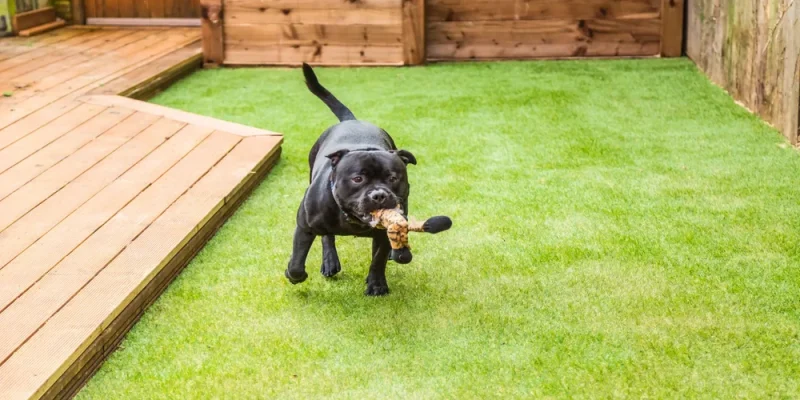
Artificial grass does not automatically hold dog smells, but odours can develop when pet waste is not cleaned properly or when drainage is inadequate. With the right product, installation and maintenance routine, artificial grass can provide a clean and practical lawn for households with dogs.
Where pet odours actually come from
Dog urine passes through the fibres and backing of artificial grass. If the lawn has been installed over a free-draining base, the liquid should move away from the surface.
Problems usually occur when urine becomes trapped underneath the turf, when the area is not rinsed regularly or when solid waste is left on the lawn. Warm weather can make existing smells more noticeable, particularly in frequently used sections of the garden.
The artificial grass itself is not usually the main cause. Odours are more likely to come from bacteria and residue that have not been properly removed.
A cleaner alternative to muddy lawns
Natural grass can become muddy, worn or patchy when used regularly by pets. Dogs may dig holes, create bare areas or carry dirt into the house after playing outside.
Artificial grass provides a consistent surface that does not turn into mud after rain. It can also make pet waste easier to locate and remove. Once solid waste has been collected, the affected area can be rinsed with water and cleaned using a suitable artificial grass treatment when required.
This can make everyday lawn hygiene simpler for busy pet owners.
Drainage is essential for freshness
A pet-friendly artificial grass installation should allow urine and cleaning water to pass through the surface efficiently. The drainage rate of the turf and the quality of the base underneath both matter.
If the ground has poor natural drainage, an installer may need to improve the base or introduce another drainage solution. Without this preparation, moisture can remain trapped and contribute to unwanted smells.
Selecting artificial grass specifically suited to pets can also help. Pet-focused products are designed to support frequent use, cleaning and drainage.
Regular cleaning keeps odours under control
Artificial grass still needs basic maintenance. Pet owners should remove waste promptly and rinse high-use areas regularly. How often the lawn needs cleaning will depend on the number of dogs, the size of the space and how frequently the lawn is used.
A pet-safe deodorising or enzyme-based cleaner may be useful for areas where dogs repeatedly urinate. These products help break down the organic residue that can cause lingering smells rather than simply masking the odour.
Harsh chemicals should be avoided unless they are confirmed as suitable for artificial grass and safe for pets.
A hygienic surface for active pets
Artificial grass offers several practical hygiene benefits. It does not require pesticides, lawn treatments or muddy soil, and it provides a level surface that is easy to rinse.
When the right turf is paired with professional installation and regular care, pet smells should not become a permanent feature of the lawn. Instead, artificial grass can provide a durable, low-mess and comfortable outdoor area for dogs and their owners.
The key is to think beyond the visible surface. Good drainage, prompt cleaning and the right maintenance products will help keep the lawn fresh throughout the year.






Comments