
 By
By 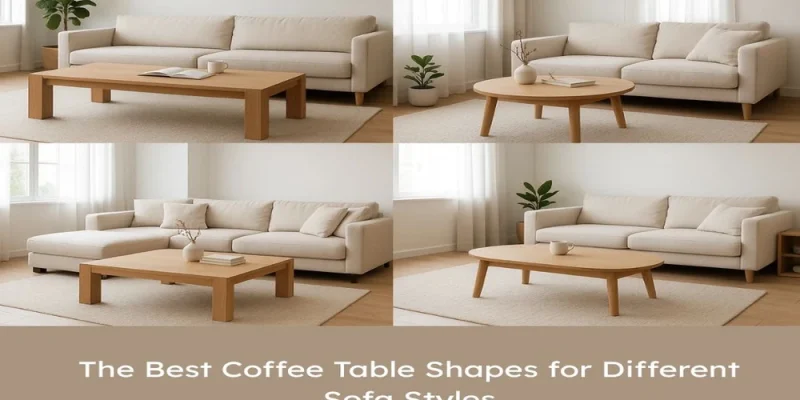
Choosing a coffee table is easier when you start with the sofa. Since the sofa usually takes up the most visual and physical space in a living room, the coffee table should complement its shape rather than compete with it.
A rectangular sofa, L-shaped sectional, curved couch, or compact loveseat can each benefit from a different coffee table shape. The right combination can improve the flow of the room, make the seating area easier to use, and create a more balanced appearance.
Instead of choosing a table based only on its appearance, consider how its shape works with the furniture you already own.
Rectangular Coffee Tables for Standard Sofas
A rectangular coffee table is one of the most versatile choices for a traditional three-seat sofa.
Its long profile follows the horizontal lines of the sofa, creating a natural visual relationship between the two pieces. It also provides plenty of surface area for books, drinks, decorative objects, and everyday use.
This combination works particularly well in medium and large living rooms where there is enough space around the furniture.
If your sofa is long, avoid choosing a table that is dramatically shorter unless you intentionally want a more minimal arrangement. A coffee table that occupies a reasonable portion of the sofa’s length generally feels more proportionate.
Round Coffee Tables for Sectional Sofas
Round tables can work especially well with L-shaped and U-shaped sectionals.
A sectional already creates strong horizontal and angular lines. Introducing a circular coffee table provides contrast and makes the center of the seating arrangement feel softer.
Another advantage is circulation.
There are no corners extending into the walking area, which can make a round table easier to navigate around in a busy living room.
A round design can also encourage conversation because everyone seated around the sectional has a relatively equal relationship to the center table.
Oval Tables for Softer Proportions
An oval coffee table combines some of the benefits of rectangular and round designs.
It provides a longer usable surface than many round tables while eliminating sharp corners. This makes it useful for elongated sofas where you want a softer silhouette.
Oval tables can alsoA work well when other furniture pieces in the room have curved details.
If your sofa has rounded arms or curved upholstery, an oval coffee table can reinforce those shapes without making the entire room feel overly coordinated.
Square Coffee Tables for Balanced Seating
Square coffee tables are particularly useful when the seating arrangement has similar proportions on multiple sides.
They can work well with large sectionals, two facing sofas, or four lounge chairs arranged around a central area.
Because square tables have a relatively substantial visual footprint, they need enough surrounding space. In a compact living room, a large square table can quickly make circulation difficult.
Before choosing one, measure the space between the seating pieces and think about how people move through the room.
Live Edge Tables for Organic Contrast
Not every coffee table needs a perfectly geometric shape.
A natural slab can introduce an organic profile that contrasts with the structured shape of a sofa. A live edge coffee table, for example, can retain portions of the wood’s natural contour rather than using a completely uniform perimeter.
This can be particularly effective in interiors where the sofa has clean, contemporary lines.
The contrast gives the room more visual personality without requiring additional decorative elements.
Match the Table to the Sofa’s Scale
Shape is only one part of the equation.
The size of the coffee table should also make sense in relation to the sofa. A small table can disappear in front of a large sectional, while an oversized table can make a compact sofa feel crowded.
Look at the visual weight of both pieces.
A deep, substantial sofa can generally support a more substantial table. A slim sofa with raised legs may look better with a lighter design.
You should also consider the height. A table that sits close to the sofa seat height is usually comfortable for everyday use.
Consider the Room’s Traffic Flow
The best shape is partly determined by how people move through the room.
If the coffee table sits beside a major walkway, rounded corners may be more practical. If the table is surrounded by seating with little foot traffic, you have more freedom to use rectangular or square designs.
Do not design the seating area in isolation.
Think about doors, hallways, entertainment units, windows, and other routes people regularly use.
A visually attractive arrangement that blocks the natural path through the room will become frustrating over time.
Let the Rug Guide the Shape
Your area rug can also influence which coffee table shape feels right.
A rectangular rug naturally supports a rectangular or oval table, while a round rug can create an interesting foundation for a circular table.
That does not mean you have to match the shapes exactly.
Contrast can be effective. A round coffee table on a rectangular rug, for example, can create a more dynamic arrangement.
The important thing is to consider the relationship between the two rather than selecting each piece independently.
Think About the Style of the Room
Different shapes can also communicate different design personalities.
Rectangular tables often feel structured and traditional. Round tables can appear more relaxed and conversational. Square designs can feel substantial and symmetrical, while organic shapes create a more natural and informal impression. A rustic coffee table can also bring warmth and a relaxed character to a living room, particularly when its wood tones and natural details complement the surrounding furniture.
Your choice should support the overall character of the room.
A highly geometric modern interior may benefit from an organic wood table as a contrasting focal point. A traditional room may look more cohesive with classic rectangular proportions.
Choose Based on How You Actually Live
A coffee table should be functional, not just decorative.
If you frequently host guests, a larger surface may be valuable. If the table is mainly used for a cup of coffee and a few books, a smaller design may be sufficient.
Households with children or pets may also benefit from rounded profiles.
Think about what happens around the table every day. Furniture works best when it supports your routines rather than forcing you to adapt to it.
Create a More Balanced Seating Area
There is no single coffee table shape that works for every living room.
Rectangular tables tend to pair naturally with standard sofas, round designs work well with sectionals, oval tables soften longer seating arrangements, and square tables can anchor balanced groupings.
Organic designs offer another option when you want to introduce contrast and natural character.
Tailor Wood Haven creates handcrafted furniture using individually selected wood slabs, allowing natural contours and grain patterns to become part of the design. For homeowners looking beyond standard geometric furniture, this approach can add a distinctive focal point to the seating area.
The best coffee table is ultimately the one whose shape, size, and character make sense for both your sofa and the way you use your living room.





Comments