
 By
By 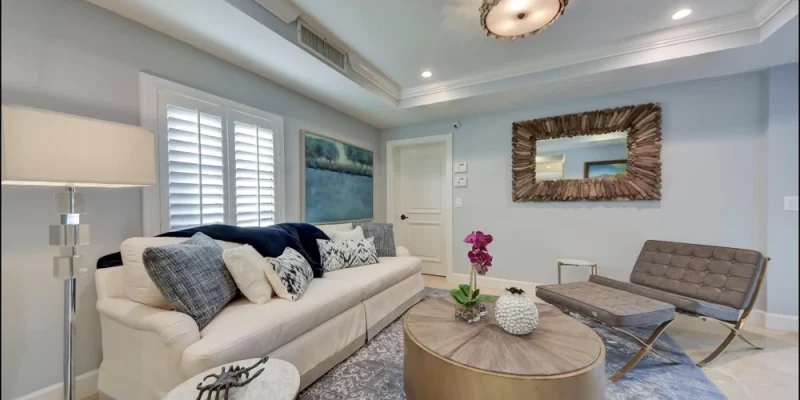
You can have a beautiful sofa, expensive dining table, designer lighting, and carefully selected paint colors and still walk into the room feeling that something is missing.
Usually, the problem is not that the furniture is wrong. The room simply has not reached its final layer.
At McKinlay Rose Interiors, we see furnishing and styling as part of the design rather than decoration added at the end. Art, rugs, window treatments, lighting, objects, books, pillows, greenery, and accessories create the relationships that make a room feel complete.
A furnished room contains things. A finished room feels intentional.
Key Takeaways
- Furniture alone rarely creates a completely resolved interior.
- Art, lighting, rugs, window treatments, and accessories help connect separate pieces into one composition.
- Scale and placement matter more than simply adding more décor.
- Personal objects prevent an interior from feeling like a furniture showroom.
- Final styling works best when it supports the original design rather than covering weaknesses in it.
Why Can an Expensive Room Still Feel Empty?
Price does not create cohesion.
Imagine a living room with a quality sofa, four chairs, a coffee table, and a media console. Every piece may be attractive on its own, yet the room can still feel disconnected.
Perhaps the rug is too small. The walls lack visual weight. The lighting is concentrated overhead. The coffee table has nothing connecting it visually to the rest of the space.
These details may sound minor, but interiors are often made successful through many small decisions working together.
McKinlay Rose’s design philosophy emphasizes exactly that point: extraordinary interiors come from getting individual details right and bringing them into one cohesive vision.
Start With Scale Before Adding Accessories
When a room feels unfinished, the solution is not automatically more décor.
First, look at proportion.
A small rug under large furniture can make the seating area feel fragmented. Tiny artwork on a large wall may look lost. A delicate lamp beside an oversized sectional may not have enough visual presence.
Conversely, filling every surface with large objects can make a room feel crowded.
The relationship between pieces matters more than the number of pieces.
This is one reason full-service interior design considers furniture layouts, lighting, artwork, architectural details, and decorative elements together instead of addressing each separately.
Add Lighting at Different Levels
A ceiling fixture can illuminate a room, but it rarely creates all the atmosphere the room needs.
Table lamps, floor lamps, sconces, decorative fixtures, and natural light introduce different layers.
Good lighting also directs attention.
A picture light can emphasize artwork. A table lamp can make a reading chair feel inviting. Decorative pendants can help define a dining area in an open floor plan.
The result feels warmer because the room is no longer lit from one source.
Use Art to Give the Room a Point of View
Artwork is one of the strongest opportunities to make an interior personal.
We do not believe every piece needs to match the sofa or repeat the room’s exact color palette. Sometimes the most interesting artwork introduces tension, energy, or an unexpected color.
The same applies to collected objects.
Travel pieces, books, ceramics, sculpture, family pieces, and objects discovered over time can prevent a polished room from feeling overly perfect.
McKinlay Rose draws inspiration from galleries, travel, architecture, fashion, restaurants, gardens, and other unexpected sources, then interprets those influences for the home and its owners.
Don’t Forget Window Treatments
Bare windows can make an otherwise complete room feel surprisingly unresolved.
Window treatments can soften architectural lines, frame views, introduce texture, improve privacy, and help manage natural light.
The right treatment depends on the room.
A waterfront residence with expansive windows presents different design questions from a bedroom requiring privacy or a formal dining room where fabric can introduce softness.
Window treatments should feel integrated with the architecture rather than attached as an afterthought.
Know When to Stop
Finishing a room does not mean filling every empty space.
Negative space gives important pieces room to breathe.
One beautiful object can have more impact than six unrelated accessories. A large piece of art may eliminate the need for several smaller items. A sculptural light fixture can become decoration in its own right.
Editing is part of styling.
The goal is a room that feels layered, not cluttered.
FAQ
What is included in final interior styling?
Depending on the project, final styling may involve artwork, accessories, books, decorative objects, pillows, lighting, rugs, window treatments, greenery, and the final placement of furnishings.
Can an interior designer style a home without renovating it?
Yes. McKinlay Rose provides furnishing and styling services for existing residences, individual rooms, condominiums, and newly completed homes that need greater cohesion or a final layer.
Bring the Whole Room Together
At McKinlay Rose Interiors, our work can continue from the first concept through sourcing, purchasing, installation, art, accessories, and final styling. The firm describes this last stage as the moment when a beautifully designed space finally begins to feel like home.
That is the difference the final layer makes. It does not simply add more things. It gives the room its personality.
This post was written by a professional at McKinlay Rose Interiors. McKinlay Rose Interiors is a full-service Interior Design company in Saint Petersburg, FL, specializing in Home Renovation, Modern Interior Design, Luxury Interior Design, and Beach Condo Interior Design. As one of the leading Interior Design companies near you-and a trusted choice among Interior Design in Tampa FL -we serve clients throughout Saint Petersburg, Clearwater, and Sarasota, FL. Our experienced team provides expert guidance and reliable solutions, making us a top choice for Interior Design near you, focused on quality, value, and performance.



Comments