
 By
By 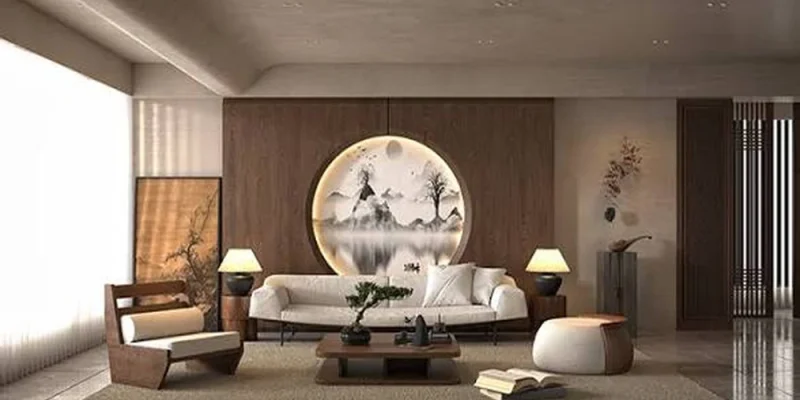
Prepared for external publication
Interior design is increasingly moving away from completely flat, featureless walls. One of the most practical ways to introduce depth without overwhelming a room is through textured wall panels, which can turn an ordinary surface into an architectural element while still working with furniture, lighting and the wider colour scheme.
The appeal of textured walls is partly visual and partly architectural. A flat painted wall reflects light in a fairly uniform way, while a profiled surface creates highlights and shadows that change throughout the day. This gives the wall a sense of movement even though the material itself remains completely static.
Texture without visual clutter
A successful interior does not necessarily need more objects. In many rooms, adding shelving, artwork and decorative accessories simply creates additional visual noise. A textured wall can achieve a stronger result with fewer individual elements.
Fluted, ribbed and grooved panels create repetition across a surface. Because the pattern is consistent, the eye reads it as part of the architecture rather than as another piece of decoration.
This is particularly useful in living rooms, bedrooms, reception areas and commercial interiors where designers want a feature wall that feels considered but not excessively ornamental.
Why MDF works particularly well
Many modern profiled panels are produced from medium-density fibreboard (MDF), an engineered wood material that can be machined into accurate and repeatable profiles.
For decorative applications, that consistency is important. A wall made from multiple panels needs the grooves or ribs to continue predictably from one section to another. MDF also provides a smooth surface that can be primed and painted, allowing the texture of the panel to remain while the colour is coordinated with the rest of the room.
Paintable panels are especially useful when the design calls for the wall, doors or surrounding cabinetry to share the same colour.
Vertical lines can alter the proportions of a room
The direction of a decorative profile has a noticeable effect on how a space feels. Vertical flutes tend to emphasise height. They naturally draw the eye upwards and can therefore work particularly well on full-height feature walls.
Horizontal profiles create a different impression. They can visually extend a wall and are often effective in wider rooms, corridors or furniture applications.
The profile itself can also change the character of the installation. Narrow grooves produce a finer texture, whereas broad flutes generate stronger areas of light and shadow. This means decorative wall panels are not simply a choice of material. Profile width, orientation and colour all contribute to the final architectural effect.
Feature walls are becoming more integrated
Older feature-wall concepts often relied on a single contrasting colour or patterned wallpaper. Contemporary interiors increasingly use materials and three-dimensional surfaces instead.
A panelled wall can continue behind a television, bed, reception desk or fitted furniture. It can also be coordinated with joinery rather than treated as an isolated decorative element. This creates a more integrated appearance because the feature becomes part of the construction of the room.
Curves create further possibilities
Flexible decorative panels have expanded what can be achieved with profiled surfaces. Instead of stopping at a flat wall, some panel systems can follow rounded corners, columns, curved counters and other shaped structures. This allows the same visual language to continue across both flat and curved surfaces.
Choosing the right level of texture
More texture is not always better. For smaller spaces, a narrow and relatively subtle profile may be enough to create interest without dominating the room. Larger walls can often accommodate wider and deeper patterns.
Lighting also matters. Directional lighting positioned close to a profiled wall will emphasise every groove, while softer ambient lighting creates a more restrained effect. Colour changes the result again. Light neutral colours make the shadows subtle, whereas dark finishes can create stronger contrast between the peaks and recesses.
A practical architectural finish
The popularity of decorative wall panels reflects a broader change in interior design. Homeowners and designers increasingly want surfaces that perform more than one visual role. Instead of relying entirely on furniture and accessories for character, the wall itself becomes part of the design.
When profile, material, orientation, lighting and colour are considered together, a relatively simple panelled surface can completely change the atmosphere of a room without requiring an elaborate interior scheme.



Comments